This color-changing lemonade recipe uses butterfly pea flower tea and lemon juice to create a fun chemistry experiment in every glass.
There is something especially fun about a science experiment you can drink.
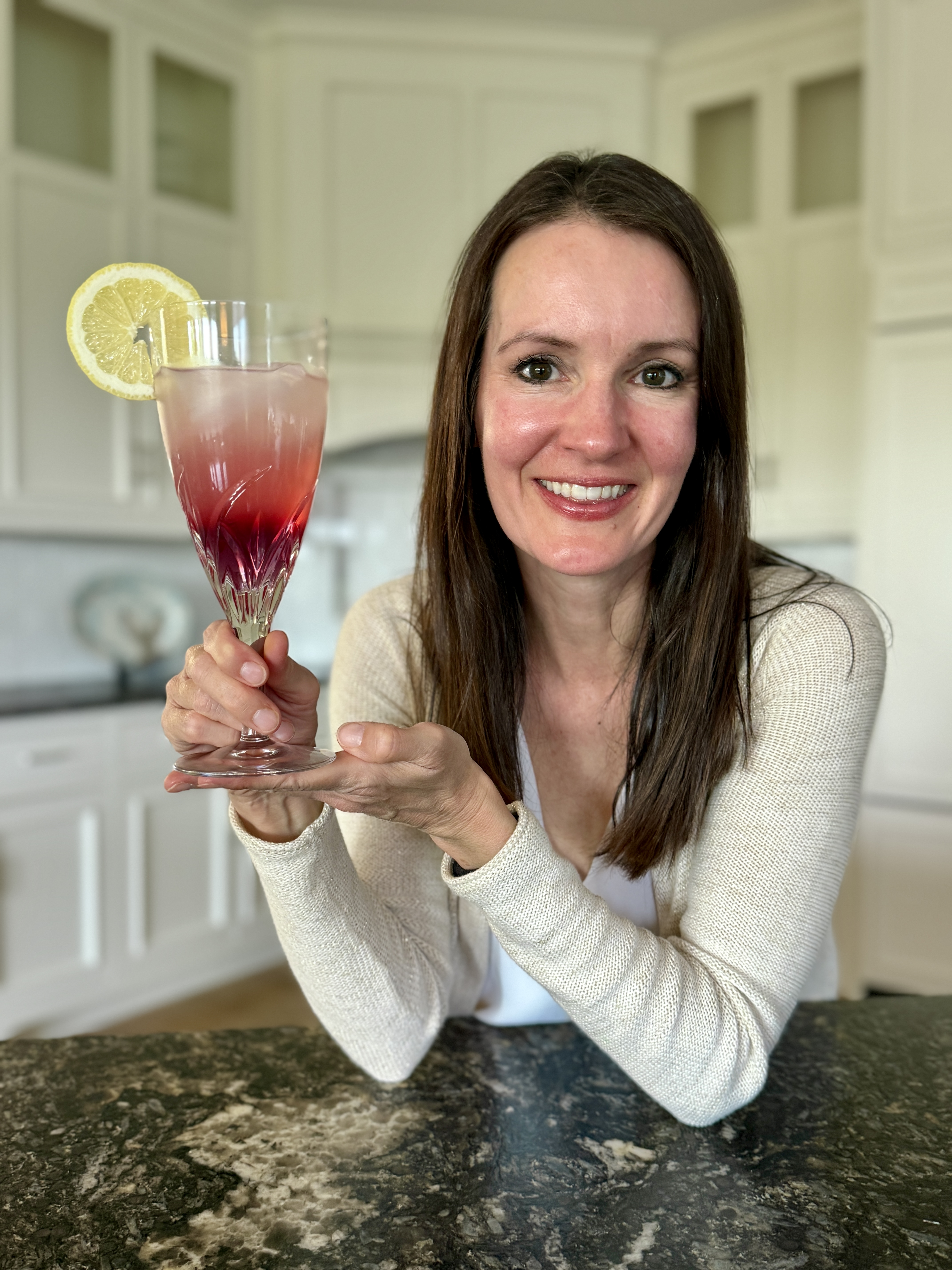
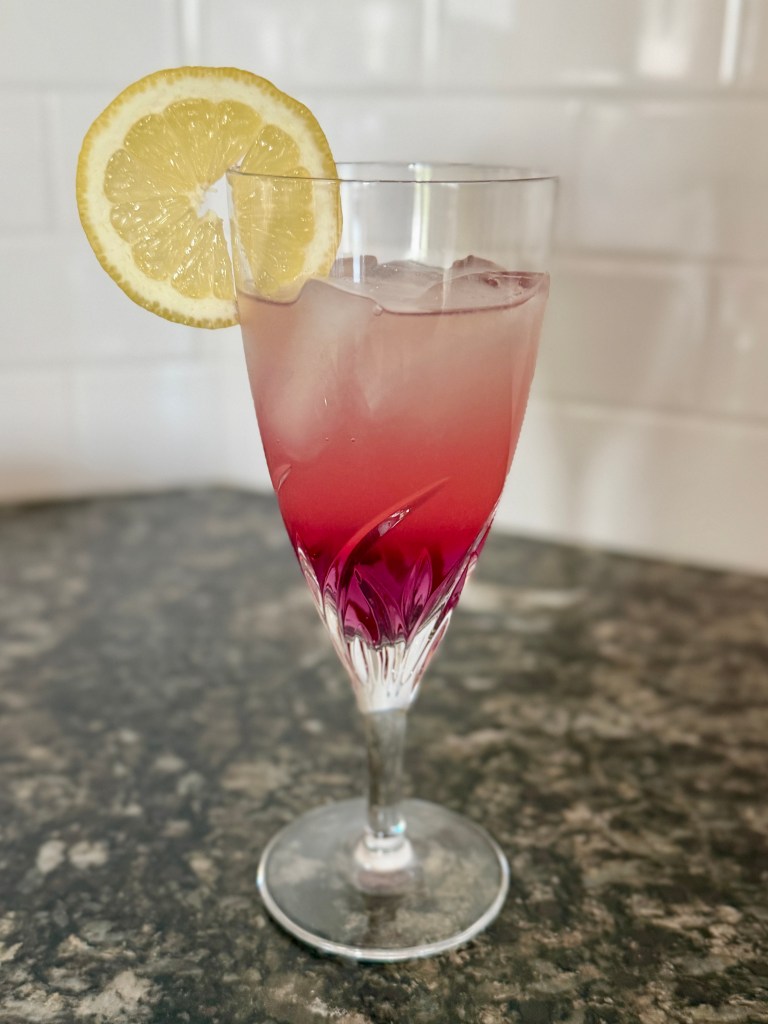
Color-changing lemonade is part chemistry lesson and part magic trick. It starts with freshly squeezed lemons and a simple syrup infused with butterfly pea flower tea. When the cobalt-blue syrup meets the lemon juice, the colors transform into beautiful layers of pale yellow, magenta and deep purple.
And the best part? This experiment doesn’t just look impressive. It tastes delicious, too. The lemonade is tart, lightly floral and refreshing. This drink will wow kids, guests and anyone who enjoys dabbling in kitchen chemistry.
The Science Behind Color-Changing Lemonade
Color-changing lemonade works because of a blue pigment in butterfly pea flower called anthocyanin. Anthocyanin has the unique ability to act as an indicator. An indicator is a substance that changes color when it comes into contact with an acid or a base.
You may remember using litmus paper in science class to test whether a substance was acidic or basic. But indicators are not only found in labs. They show up in plants, too. Hydrangeas, for example, turn pink in acidic soil and blue in alkaline soil. Red cabbage is another classic acid-base indicator. If you chop it up and boil it in water, the remaining liquid will turn pink when mixed with an acid and green when mixed with a base.
With butterfly pea flowers, anthocyanin appears electric blue or deep purple in basic pHs and changes to a lovely magenta in acids, such as lemon juice.
Butterfly pea flower tea comes from a flower commonly found in Southeast Asia, where it’s used as a natural food coloring in desserts, drinks and rice dishes. In Thailand and Vietnam, it is also used to make nam dok anchan, a sweet herbal tea served with honey and lemon.
Dabbling in Kitchen Chemistry
I decided to try color-changing lemonade as part of my latest learning project. I’m brushing up on basic chemistry so I can better understand the world around me.
And once you start looking for chemistry, you notice it everywhere.
It is in the food we cook, the drinks we make, the cleaners we use, the medicines we take and the questions our kids ask at the most random moments of the day. Why does ice float? Why does the sky change color? Why do some ingredients mix while others separate?
Chemistry is the study of the matter that makes up the world around us. That’s why chemistry is often called the central science. It connects to biology, physics, earth science, medicine, cooking, the environment and so many parts of everyday life.
Including a glass of lemonade.
Making Color-Changing Lemonade
This experiment is simple, kid-friendly and beautiful to watch. For the strongest color change, use dried butterfly pea flowers. Our local grocery shop doesn’t carry them as loose tea, so I substituted four tea bags of Daily Beauty Blueberry Lavender Tea from The Republic of Tea. This tea includes butterfly pea flower along with blueberry, hibiscus, lavender, lemongrass, rose hips, bamboo and schisandra berry.
I did this experiment with my kids, and we were not completely sure whether it would work because of the additional tea ingredients. But to our delight, the butterfly pea flowers worked their magic. And the extra ingredients added fruity, herbal notes that made the lemonade even more interesting.
Color-Changing Lemonade Recipe
Yield: 8 servings
Butterfly Pea Syrup
2 cups water
1 ½ cups granulated sugar
¼ cup dried butterfly pea flowers
Or substitute: 3-4 tea bags of Daily Beauty Blueberry Lavender Tea from The Republic of Tea
Lemonade
1 ½ cups freshly squeezed lemon juice, about 10 to 12 lemons
3 ½ cups water
Ice
Lemon slices, for garnish
Directions
Step 1: Make the butterfly pea syrup
If using dried butterfly pea flowers: Add the water, sugar and dried butterfly pea flowers to a medium saucepan. Heat over medium-low heat, stirring occasionally, until the mixture begins to simmer and the sugar has dissolved. Remove from the heat. Cover and let steep for about 10 minutes, then strain the syrup through a fine-mesh sieve to remove the flowers.
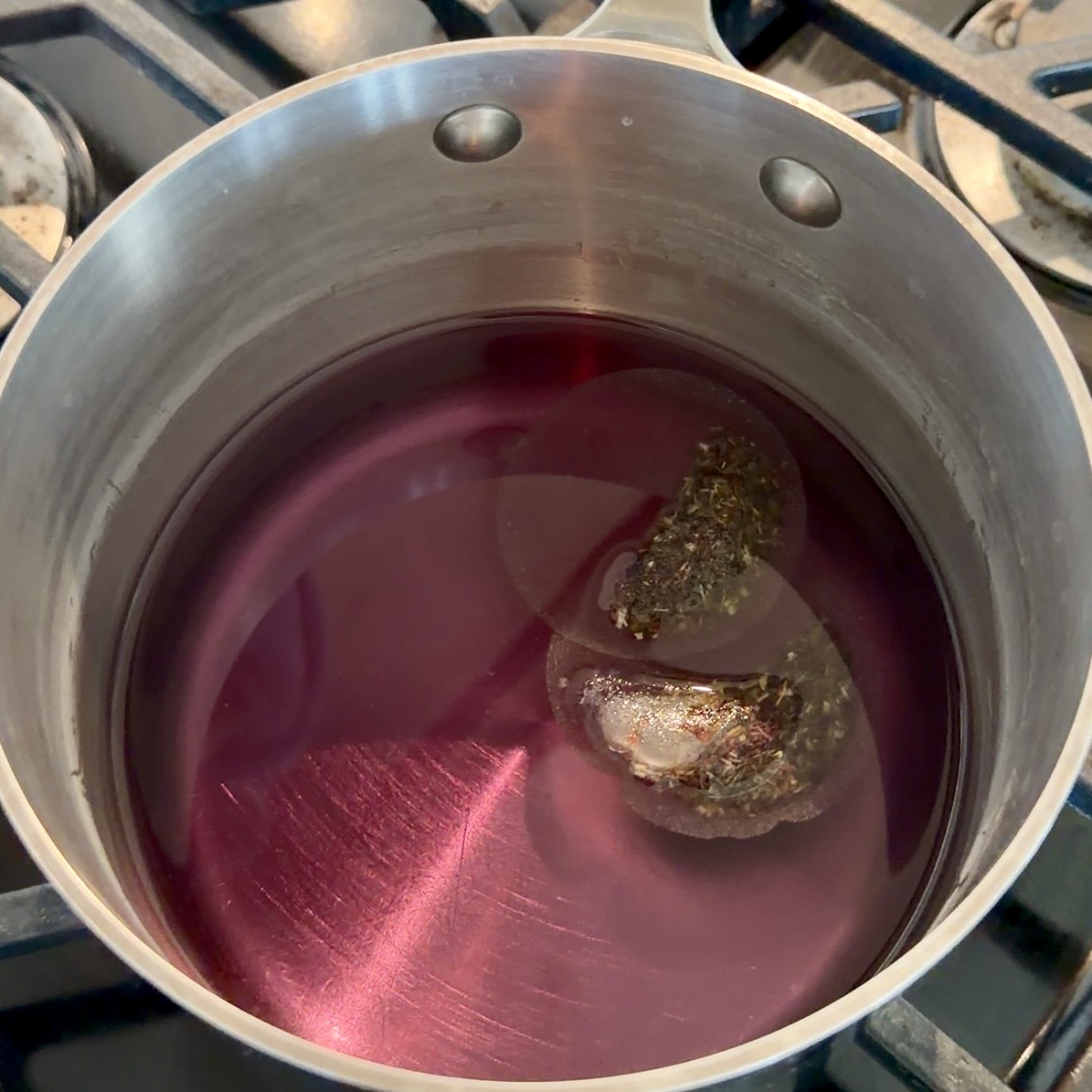
If using tea bags: Add the water and sugar to a medium saucepan. Heat over medium-low heat, stirring occasionally, until the mixture begins to simmer and the sugar has dissolved. Remove from the heat. Add the tea bags, cover and let steep for about 10 minutes. You may need to steep the tea a little longer until the syrup becomes a deep blue or purple.
Set the syrup aside and let it cool.
Step 2: Make the lemonade
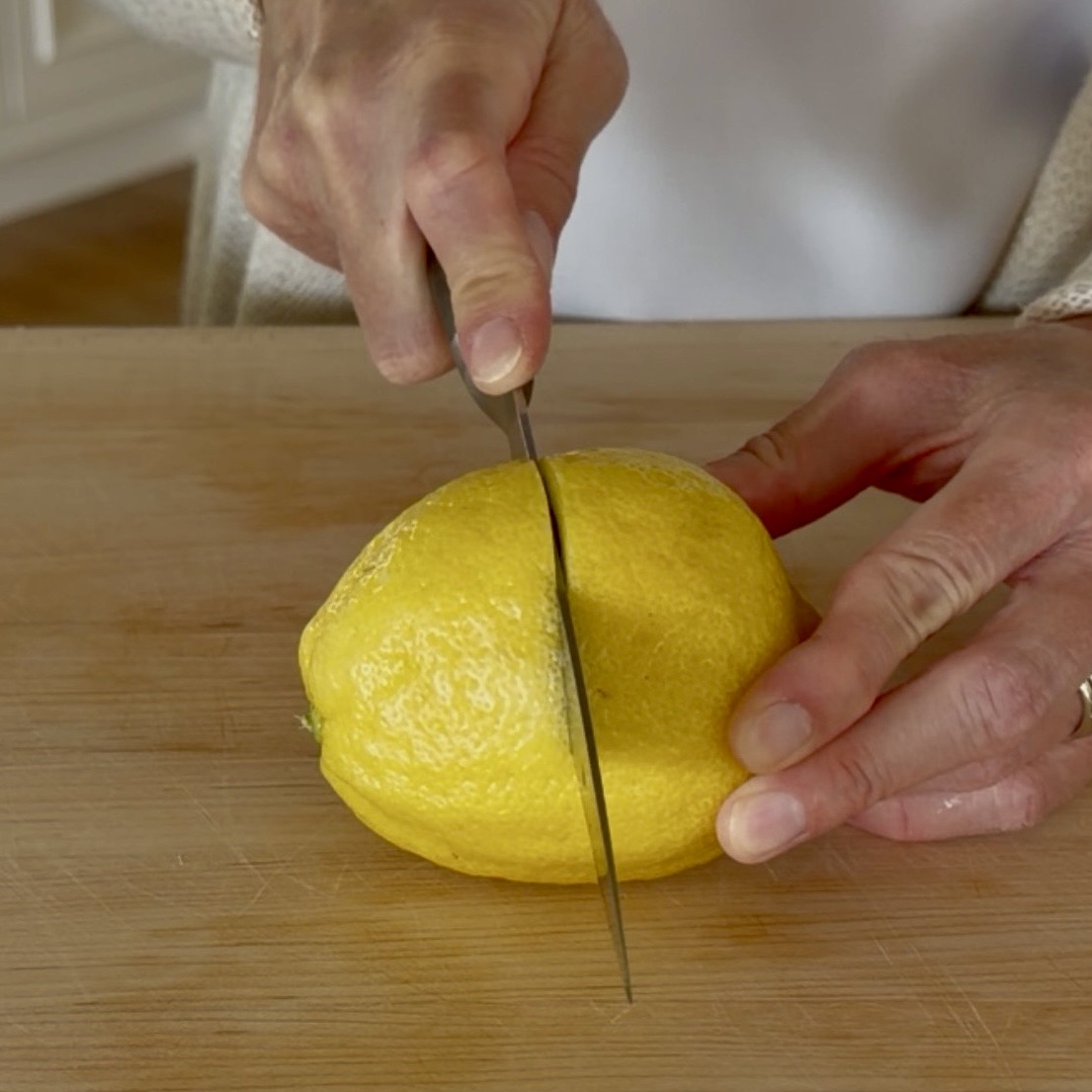
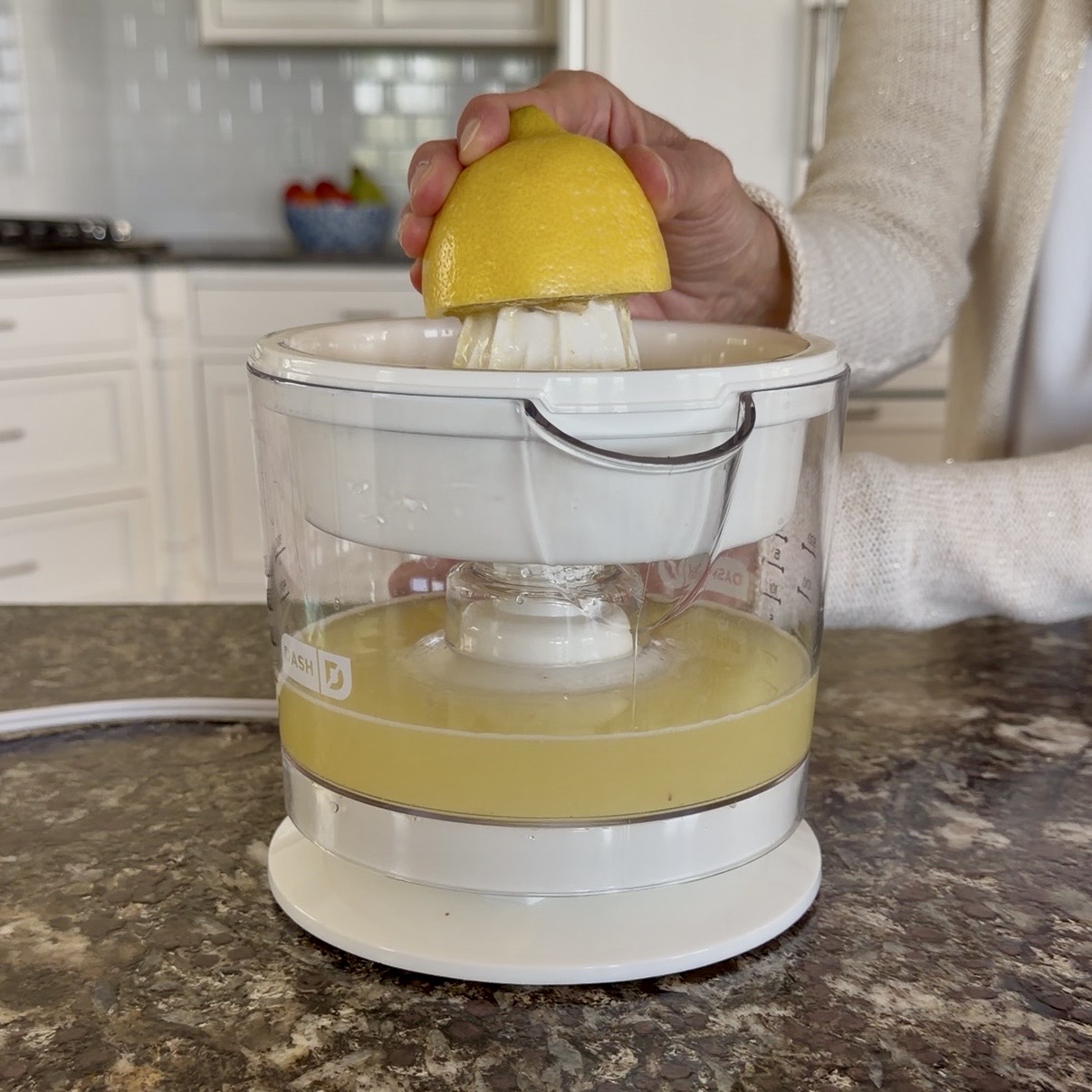
Squeeze the lemons and pour the juice into a large pitcher. Add the water and stir to combine.
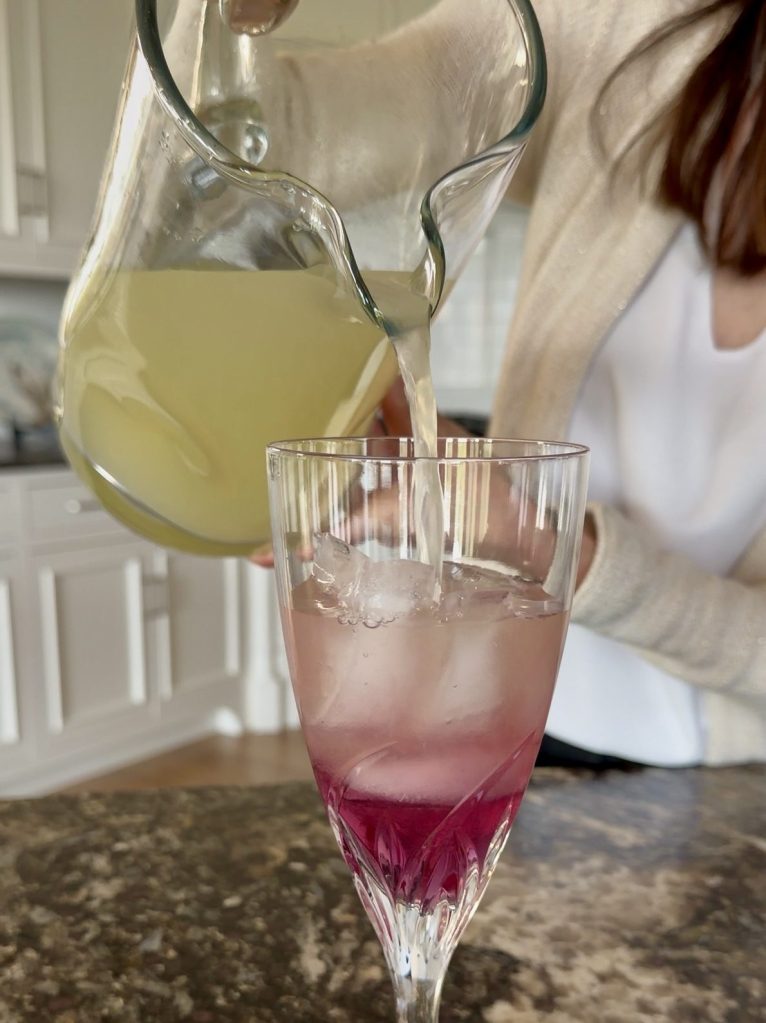
When you are ready to serve, fill each glass with ice. Add ¼ cup of cooled butterfly pea syrup to each glass. Slowly pour the lemon water over the syrup.
Watch and marvel as the color begins to change.
For the Best Color Effect
Make each glass individually. That gives you the most dramatic layering effect, with purple syrup at the bottom, yellow lemonade at the top and a bright pink color where the acid and anthocyanin meet.
You can also mix the syrup directly into the pitcher. The whole batch will turn a gorgeous pink or magenta, but you will lose the layered look.
Either way, you get a refreshing summer drink and a delicious demonstration of chemistry in every glass.
Sources
Carey, A. (n.d.). Color changing lemonade. Left Brain Craft Brain. https://leftbraincraftbrain.com/ada-twist-color-changing-lemonade-lab/
Goldberg, E. (2016, January 31). The science behind this mesmerizing color-changing tea. Bon Appétit. https://www.bonappetit.com/drinks/non-alcoholic/article/butterfly-pea-flower-color-changing-tea
Moore, J. T. (2011). Chemistry for dummies (2nd ed.). Wiley.









Leave a Reply