When learning feels hard, it can be tempting to give up. But understanding productive struggle can help you persist through challenges, advance your skills and deepen your learning.
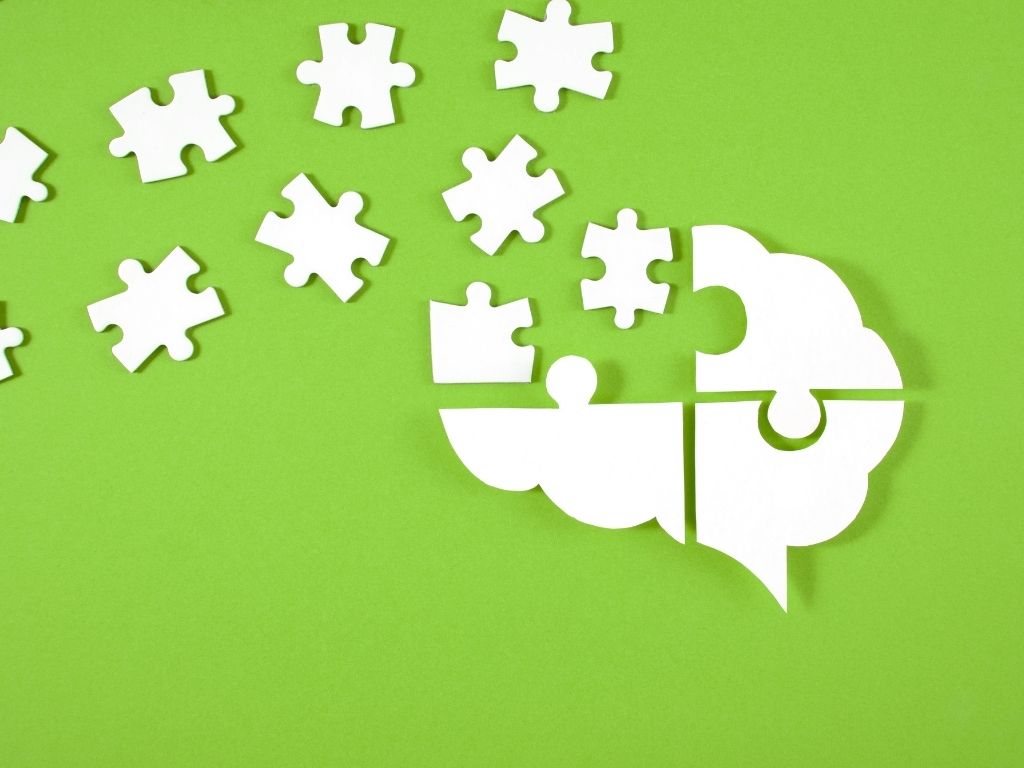
Have you ever felt stuck while learning something new and thought, “Maybe I’m just not good at this”?
Maybe you were trying to learn a new skill, understand a difficult concept, or make your way through an online course. At first, you felt excited. But then the confusion set in. You started making mistakes. You had to reread the same paragraph three times. Or you realized that something you thought you understood still felt fuzzy.
And that little voice in your head started to wonder: Is this a sign that I’m not cut out for this?
What Is Productive Struggle?
One myth that can hold us back as learners is the idea that if learning is successful, we should feel clear and confident. We tend to imagine learning as this smooth upward path. You read something, you understand it. You practice something, you get better. You take a class, and everything gradually clicks into place.
In reality, learning often feels the opposite. Confusion, uncertainty and frustration are all part of the learning process. Often, those uncomfortable moments are necessary before you reach a new level of understanding.
Educators call this productive struggle. This notion that struggle can actually be productive helps reframe the discomfort we often feel when trying to tackle a new skill. It also provides motivation to keep wrestling with a challenge instead of immediately backing away from it.
Productive struggle is not about making learning so hard that you feel defeated. It is not about pushing through endless frustration with no support. The goal is to stretch yourself just beyond what you can already do. You want to find the sweet spot where learning feels effortful but still possible.
How to Build Productive Struggle Into Your Learning
You can use productive struggle to maximize your overall learning by choosing strategies that push you just beyond your comfort zone. Here are a few techniques that are especially helpful if you are learning independently, whether you are reading books, taking online courses, building a new professional skill or practicing a hobby.
Strategy 1: Set Learning Goals With “I Can” Statements
Productive struggle works best when you have a clear sense of what you are trying to learn and what success looks like. That means identifying your current level of knowledge or skill and setting a goal that will stretch your abilities.
One effective way to do this is by using “I Can” statements.
An “I Can” statement is a short sentence that describes what you should be able to know, understand or do after a focused period of learning. For example, “learn about digital photography” is broad. But “I can explain how aperture affects depth of field” gives you a clearer target.
Strong “I Can” statements are specific, action-oriented and manageable. Each one represents a step in a larger learning path. They make productive struggle more intentional because you are not working toward some vague, far-off goal. You are using the challenge to figure out your very next steps.
“I Can” statements also give you a benchmark for measuring progress. You can ask yourself: Can I do this yet? If the answer is no, you now have useful information. What part still feels unclear? What do I need to practice? Where might I need an example, explanation or feedback?
Because “I Can” statements are written in the present tense, they also help you picture yourself as someone who is capable of the task, even while you are still building the necessary skills.
If you are starting something new, try writing one or two “I Can” statements before you begin. Keep them small enough that you can use them to guide your learning.
For more tips, see my post “How to Set Better Learning Goals With ‘I Can’ Statements.”
Strategy 2: Use Retrieval Practice
You have probably heard the phrase: Use it or lose it. When it comes to learning, forgetting is not simply a failure of memory. It is part of how learning works. As time passes, some details naturally fade. And when you try to bring that information back, your brain has to work harder.
That effort is what makes retrieval practice so powerful. Retrieval practice means trying to recall information you have already learned instead of simply rereading or reviewing it.
And this is where productive struggle comes in. Rereading often feels comfortable. Highlighting can feel productive. Looking back at your notes can feel reassuring. But trying to remember something without looking? That can feel uncomfortable. You may pause. You may blank. You may only remember part of the idea. But that effort to pull information from memory strengthens your ability to remember it later.
You can build retrieval practice into your learning by making flashcards of key facts, ideas or vocabulary while reading. Test yourself a day or two after your first study session. Then try again a week later and a month later. You may forget some of the material between sessions, but each time you work to retrieve the information, you deepen your learning.
Another strategy is free recall. After reading a section of a book, close the book and write down everything you can remember on a blank sheet of paper. You can also say the main ideas aloud in your own words. This may feel harder than highlighting or rereading, but that extra effort is what makes it more effective.
Retrieval practice can also help when memorizing a speech or presentation. Instead of spending most of your time rereading your notes, spend one-third of your practice time getting familiar with the material and the remaining two-thirds time reciting it from memory. The first few attempts may feel awkward. You may stumble. You may forget what comes next. But that is the learning process at work.
Strategy 3: Take a Pretest
The words “test” and “quiz” are often associated with evaluation. We usually think of them as tools for measuring how much we have learned and where we still have gaps. But tests can also be tools for learning.
Frequent low-stakes testing is one form of retrieval practice. But there is another interesting strategy known as the forward testing effect. This happens when taking a test before learning new material helps you learn that material more effectively later.
A pretest primes your brain. It gives you a preview of the vocabulary, ideas and concepts that are most important. Even if you do not know the answers yet, the act of guessing can make you more curious and alert when you encounter the material again.
To give yourself a pretest, flip to the end of a chapter and try answering the review questions before you read. If you are taking an online course that allows multiple attempts on quizzes, try taking the quiz once before completing the lesson.
You can also use AI tools for pretesting. For example, upload or link material you want to learn into a tool such as NotebookLM and ask it to create a short quiz. Then take the quiz before studying the material in depth. NotebookLM can generate another quiz after you’ve learned the material to help you see your progress.
Strategy 4: Mix Up Your Practice
When you study or learn a new skill, do you usually work on one thing until you feel you have mastered it before moving on?
Many of us were taught to practice this way. But focused repetition can sometimes create an illusion of mastery. When you practice the same type of problem or skill over and over, you may improve quickly in the short term because you know exactly what kind of task is coming next. The problem is that learning has to transfer beyond the practice context. In real situations, you need to recognize which strategy or skill fits the task in front of you.
That is where interleaving can help.
Interleaving means mixing different skills, topics or problem types within a single study session instead of practicing one thing at a time until it feels mastered. It usually feels harder at first because your brain has to keep choosing the right approach. But that added challenge can lead to stronger learning and more flexible thinking over time.
For example, if you are learning tennis, you might alternate between forehands, backhands, volleys and serves instead of practicing only forehands for an entire session. If you are working on math, you might mix new problems with previously learned material. If you are learning to identify birds, you might compare several similar-looking species instead of studying one bird at a time.
Interleaving works because it helps you notice subtle differences between related skills, concepts or problem types, which can make your learning more flexible and durable.
When Struggle Becomes Progress
Productive struggle means giving yourself room to wrestle with ideas, make mistakes and learn from them. That kind of effort can feel uncomfortable, especially when you are used to thinking that learning should feel smooth. But the moments when you pause, rethink, compare, guess and try to recall are the moments when deeper learning is happening.
The next time learning feels frustrating, don’t assume you are doing it wrong. It could be a sign that you are stretching, growing and moving one step closer to mastery.
Sources
Blackburn, B. (2018, December 13). Productive struggle is a learner’s sweet spot. ASCD. https://www.ascd.org/el/articles/productive-struggle-is-a-learners-sweet-spot
Jung, L. A. (2024, October 1). Thriving in the zone of productive struggle. ASCD. https://www.ascd.org/el/articles/thriving-in-the-zone-of-productive-struggle
Sriram, R. (2020, April 13). The neuroscience behind productive struggle. Edutopia. https://www.edutopia.org/article/neuroscience-behind-productive-struggle/
University of San Diego Professional and Continuing Education. (n.d.). What is productive struggle? [+ strategies for teachers]. https://pce.sandiego.edu/productive-struggle-in-the-classroom/
Young, J.R., Bevan, D., & Sanders, M. (2024). How productive is the productive struggle? Lessons learned from a scoping review. International Journal of Education in Mathematics, Science, and Technology (IJEMST), 12(2), 470-495. https://files.eric.ed.gov/fulltext/EJ1413403.pdf









Leave a Reply