A growing body of research shows that play supports learning, creativity, connection and well-being throughout life. But many adults forget how much they need it.
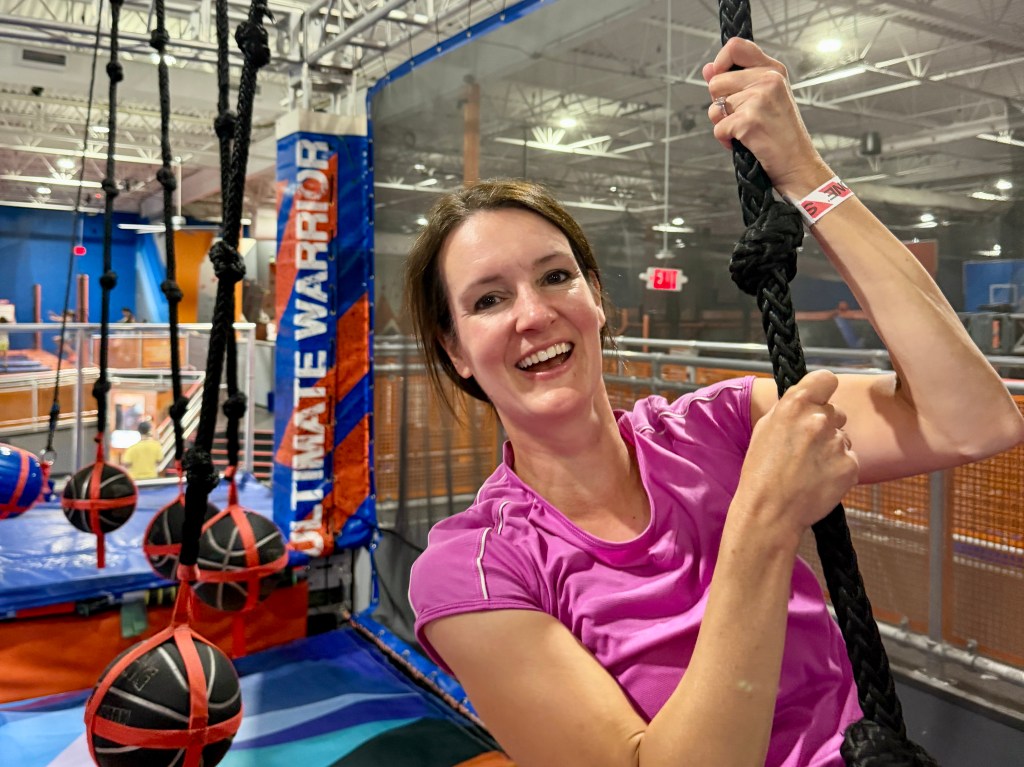
On a recent rainy day, my kids were feeling cooped up, so I took them to an indoor trampoline park.
Normally, when we go, I sit on the sidelines and watch as they bounce around, laughing with the kind of unfiltered joy adults rarely let themselves experience.
This time, I decided not to be a bystander to their joy.
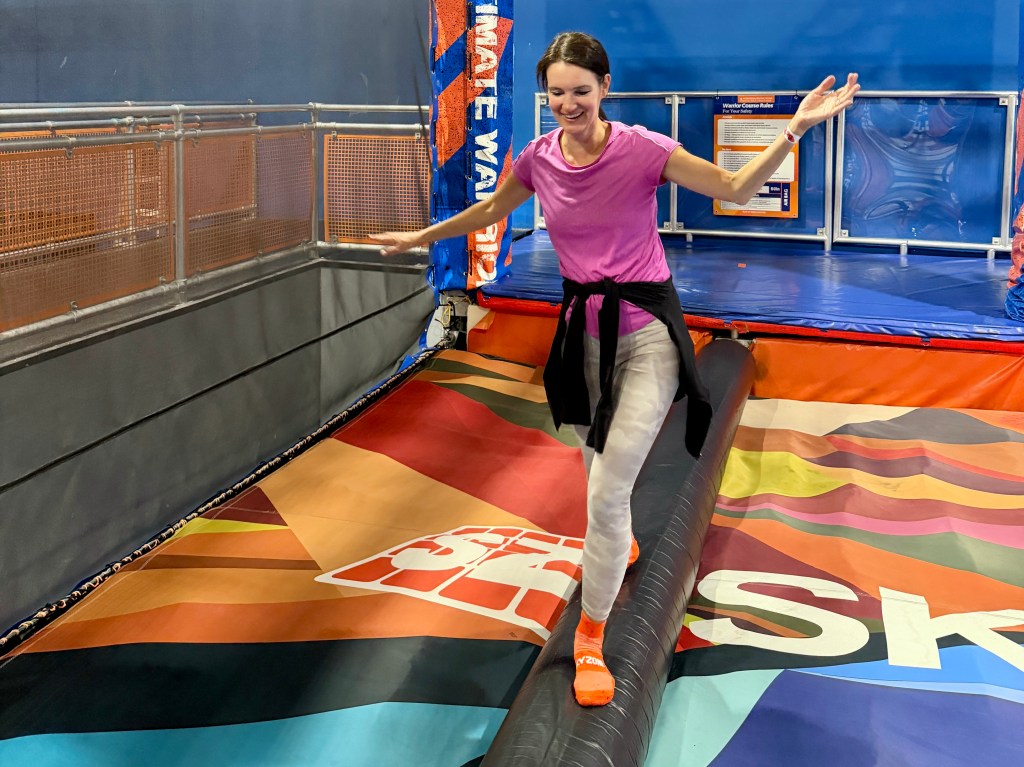
I put on the orange grip socks and joined the fun. We crawled through foam pits, pretended we were on an episode of Beast Games as we raced through obstacle courses and had a blast playing trampoline dodgeball.
I got whacked in the face, fell flat on my back and got foam bits in my eye. But I haven’t laughed that much in a long time. It was silly, sweaty and pure play.
We tend to understand this kind of play when it comes to children. Play is essential for their physical, emotional and cognitive development. Children learn through play. They become problem solvers. They develop skills for getting along with others and working through disagreements. They take risks and discover what they are capable of.
But did you know play is also crucial for adults?
In the book Play: How It Shapes the Brain, Opens the Imagination, and Invigorates the Soul, author Stuart Brown argues that play is critical for cognition, creativity, mood and well-being throughout our lives.
“Play is called recreation because it makes us new again, it re-creates us and our world,” Brown writes.
Why Adults Stop Playing
If play is so renewing, why do so many adults treat it as something they have to justify?
As we get older, many of us begin to feel guilty about playing. We absorb messages that play is unproductive, frivolous or even morally suspect. We hear sayings like “idle hands are the devil’s workshop” or “stop playing around,” as if play is something that must be outgrown.
Even when adults do make time for “play,” it is often highly organized or competitive. We sign up for races and track our times. We turn hobbies into side hustles or content to post on social media. We count steps, log workouts, monitor progress and ask whether an activity is productive enough to justify the time. We take the freedom out of play and turn it into another form of achievement.
But play makes us feel free and alive precisely because it is done for its own sake.
According to Brown, play does not need to be useful, productive or tied to any obligation. Its value is in the experience itself.
When we are fully at play, we lose track of time and become less self-conscious. We stop worrying about how we look, whether we are doing it right or what anyone else might think. Instead, we improvise. We laugh. Play loosens our grip on control and opens us to serendipity and possibility.
That is part of what makes play so renewing. It gives us a break from performance and productivity, and because it feels good, we naturally want to keep doing it.
The Importance of Play

Play is common across the animal kingdom. Bear cubs tussle. Ravens slide down snowy slopes on their backs. Hippos do repeated backflips in water. Octopuses manipulate objects for sensory stimulation. Even ants have been observed engaging in what appears to be play-fighting.
Because play is so widespread, many researchers believe it serves an important evolutionary purpose.
One theory is that play allows animals and humans to rehearse life’s challenges in a low-stakes way. Through play, we practice social skills, test boundaries and learn the give-and-take of interacting with others. We experiment with rules, roles, conflict, cooperation and risk without the full consequences of real-life danger. In this way, play helps us make sense of the world through simulation, imagination and trial and error.
Play also shapes the brain. Researchers cited in Brown’s book have found that animal species with larger brains tend to play the most. The drive to play has also been linked with development in the brain’s frontal cortex, which supports planning, decision-making, self-control and the ability to sort relevant information from irrelevant information. Play is especially prominent during periods of rapid brain growth, which may be one reason children are so naturally driven to move, imagine, explore and experiment.
Thus, play is not a break from learning. It is one of the crucial ways we learn.
Play helps us build new cognitive connections, adapt to changing circumstances and approach the world with flexibility. Its role is most obvious in childhood, but Brown argues that adults continue to need play, too.
When we go without play for too long, we may become more vulnerable to burnout and less resilient in times of stress. Our mood can darken. We may lose some of our optimism, creativity and sense of possibility. Instead of feeling flexible and open, we can become more rigid in our thinking and behavior.
Research on hobbies and well-being points in a similar direction. Studies suggest that people who continue to play games, explore new interests and keep learning throughout life may be less prone to certain health and cognitive problems.
A large study published in Nature Medicine found that having a hobby was consistently associated with better mental health in later life. Across 16 countries and more than 93,000 participants, older adults who engaged in hobbies reported fewer depressive symptoms and higher levels of happiness and life satisfaction.
As Brown writes, “We are designed to be lifelong players, built to benefit from play at any age.”
The science is clear: play is not just for kids. Throughout our lives, it remains a vital way we learn, adapt and thrive. Perhaps the question is not whether adults should play, but whether we can afford to keep living without it. In my next post, I’ll share simple ways to bring more play back into adult life.








Leave a Reply