Explore the hidden chemistry in daily life, from your morning coffee and favorite foods to the cleaning products, materials and technologies you use every day.
We live in a chemical world. Chemistry is at work in nearly every part of daily life, from the biological processes in our bodies to the reactions behind cooking and cleaning. It also helps create the materials and technologies that make our lives easier, safer and more productive.
That is why a basic understanding of chemistry is an essential part of scientific literacy. It helps us make smarter choices, explain everyday phenomena and deepen our sense of wonder about the world around us.
But if the thought of balancing chemical equations or memorizing the periodic table makes your eyes glaze over, these fun and engaging books will help you make sense of the fascinating world of chemistry – no lab coat required.
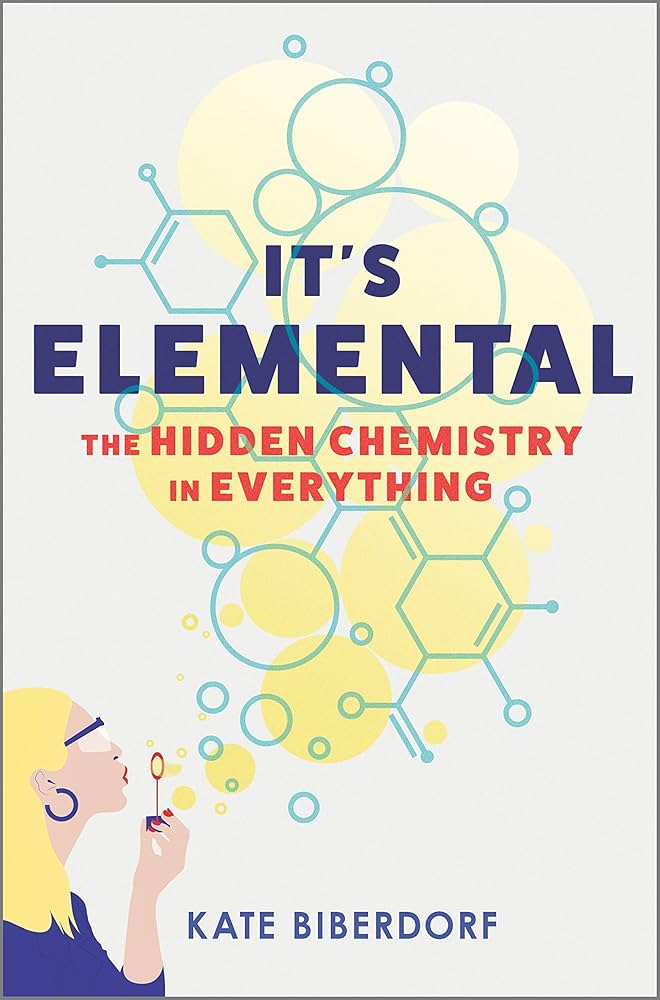
It’s Elemental: The Hidden Chemistry of Everything
By Kate Biberdorf
Why does coffee make you feel more alert? How does super-hold hairspray keep every strand in place? And why is baking soda such a versatile cleaner? Dr. Kate Biberdorf, better known as “Kate the Chemist,” shows how chemistry is at work from the moment we wake up until we go to bed, and even as we sleep.
Biberdorf begins by breaking down foundational concepts such as atoms, states of matter and chemical bonding, then connects those ideas to the ordinary routines of daily life. Readers learn the science behind shampoo, makeup, cleaning products, baand even falling in love. Written in a clear, energetic style, It’s Elemental showcases Biberdorf’s passion for making chemistry engaging and accessible.
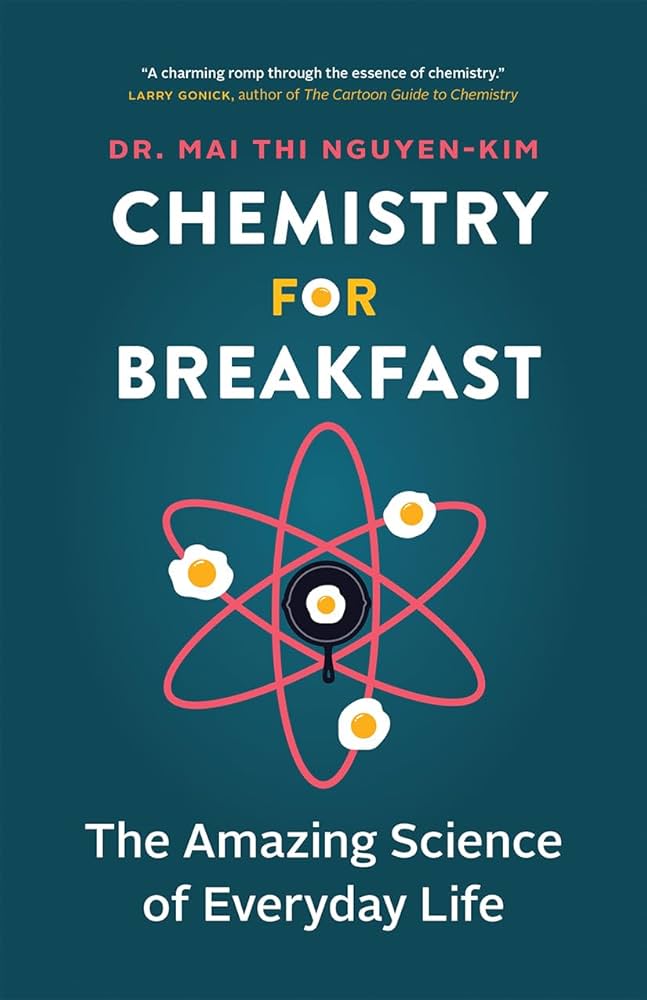
Chemistry for Breakfast: The Amazing Science of Everyday Life
By Mai Thi Nguyen-Kim
Chemist Mai Thi Nguyen-Kim takes readers through an ordinary day and reveals the chemistry behind it. She begins with the science of waking up, exploring melatonin’s role in making us feel sleepy and the body’s fight-or-flight response to a too-loud alarm clock. From there, Nguyen-Kim uses her morning coffee to explain concepts of heat conduction and thermodynamics.
As the day continues, Nguyen-Kim examines the chemistry of cellphone technology, toothpaste, food preservation and even body odor. Chemistry for Breakfast demystifies the science and shows how a basic understanding of chemistry can enhance our lives and help us observe the world with fresh eyes.
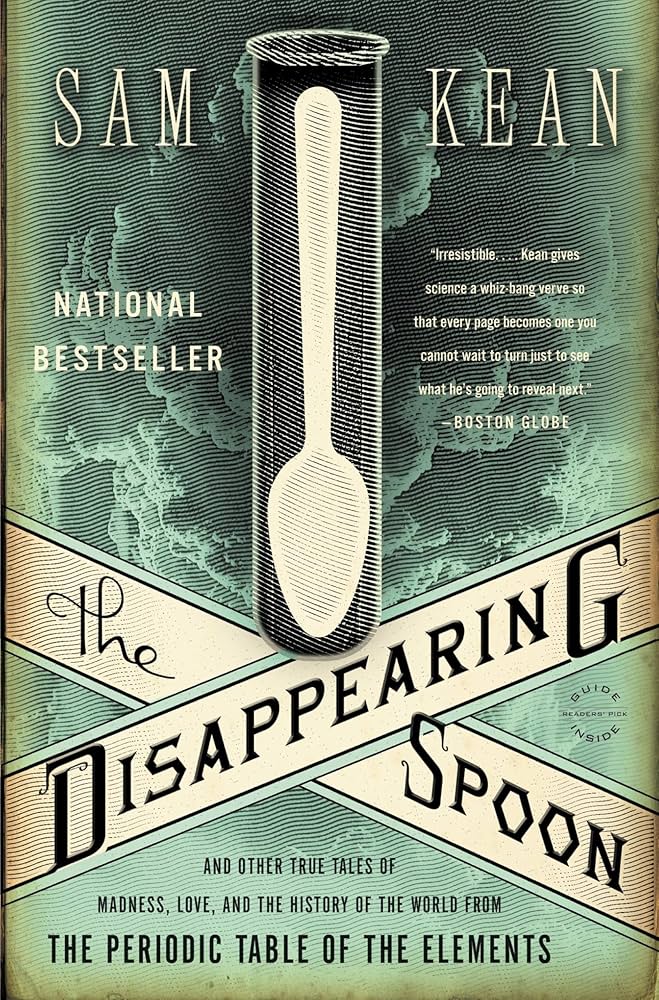
The Disappearing Spoon
By Sam Kean
Every element on the periodic table has a story to tell. Author Sam Kean looks beyond the symbols and atomic numbers to reveal a treasure trove of surprising, strange and deeply human stories. Kean traces the elements from the often eccentric scientists who discovered them to their roles in medicine, technology, warfare, art and everyday life. The book’s title comes from a classic chemistry prank involving a spoon made of gallium, a metal that melts at low temperatures and appears to vanish when placed in a warm cup of tea.
Readers will encounter the periodic table’s hidden dramas and oddities, including the “radioactive boy scout,” Gandhi’s complicated relationship with iodine, and why Napoleon III’s most prized cutlery was made of aluminum rather than silver. The book also highlights the “poisoner’s corridor,” where dangerous elements such as cadmium, thallium and mercury reveal chemistry’s darker side, as well as the ways scientists continue to create new elements in the lab. Funny, fascinating and full of memorable details, The Disappearing Spoon turns the periodic table into a tour of discovery, ambition, innovation and human curiosity.
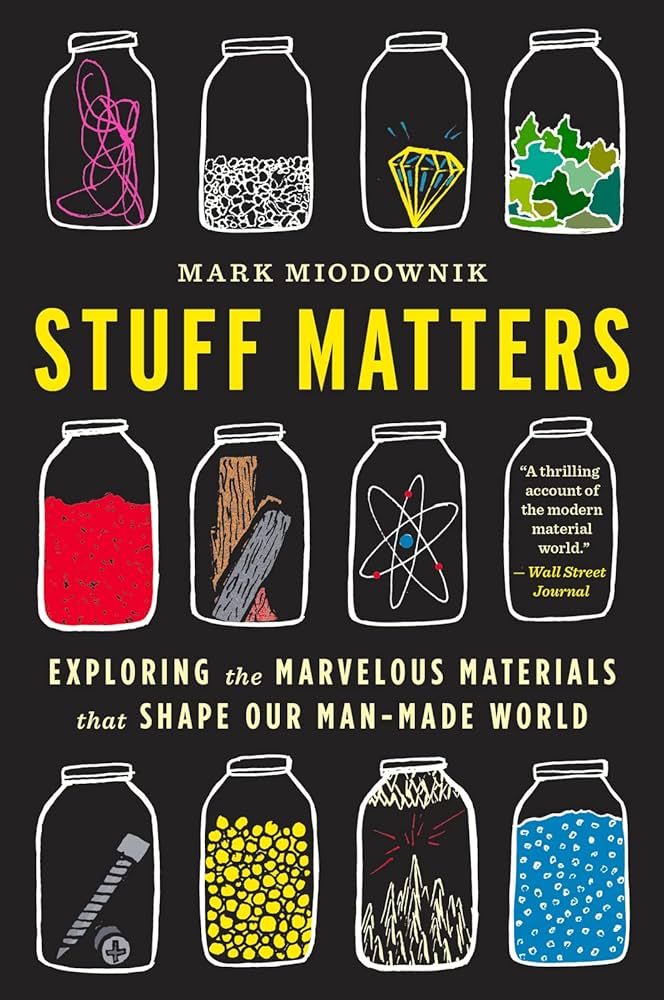
Stuff Matters: Exploring the Marvelous Materials that Shape Our Man-Made World
By Mark Miodownik
Have you ever wondered what gives chocolate its irresistible mouthfeel, why glass is transparent or what makes concrete so strong? In Stuff Matters, materials scientist Mark Miodownik explores how the molecular structures of everyday materials shape their properties, from the steel in a razor and the paper in books and money to the foam in sneakers and the plastics central to modern life.
Miodownik shows that ordinary objects are anything but ordinary. Through a mix of clever storytelling and clear explanations, Stuff Matters reveals the ingenuity behind these materials and how they have transformed our homes, tools, technologies and civilization.
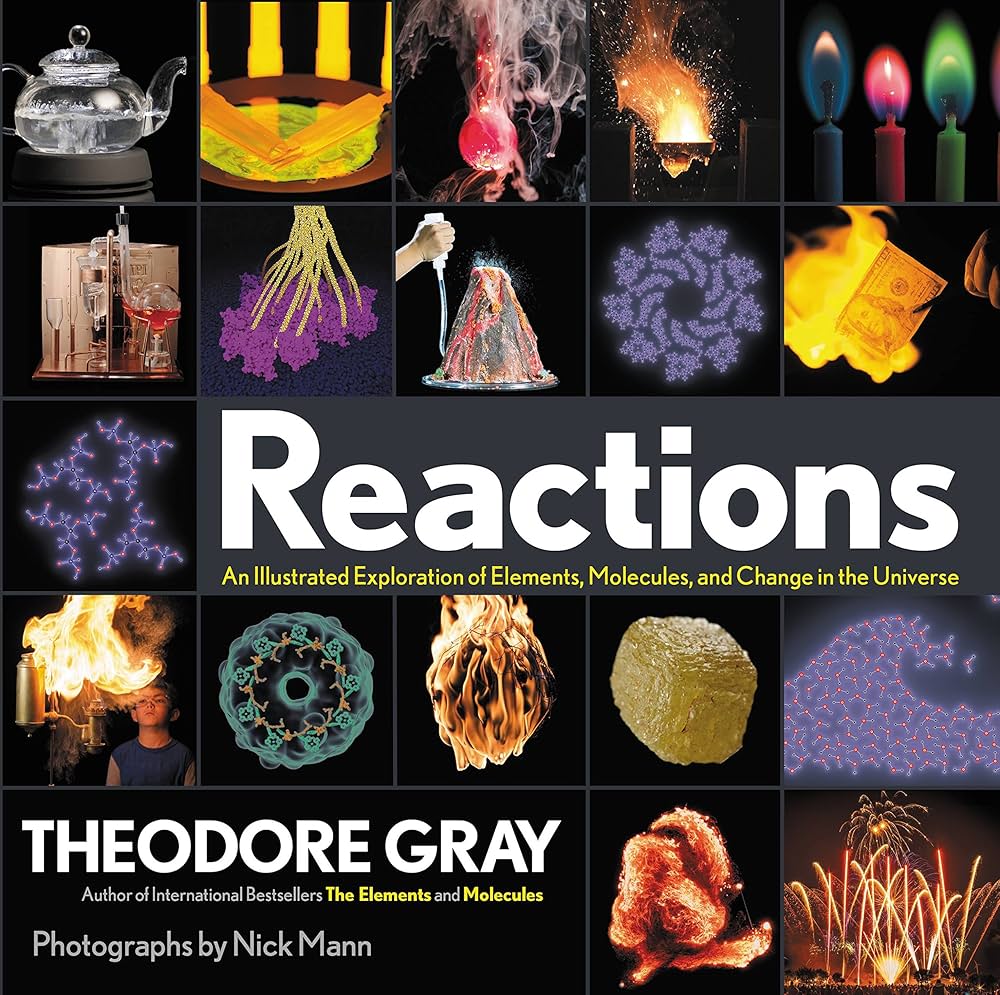
Reactions: An Illustrated Exploration of Elements, Molecules, and Change in the Universe
By Theodore Gray
Best-selling science writer Theodore Gray brings chemistry to life with vivid photographs, illustrations and examples of molecules in motion. In Reactions, the final book in his three-part series following The Elements and Molecules, Gray explores the forces that drive chemical change, including energy, entropy and time. He shows how reactions underlie everything from ignition and combustion to photosynthesis, respiration, oxidation and fermentation.
Alongside explosive and eye-catching reactions, Gray also explores slower, quieter transformations, such as paint drying, grass growing and water boiling. The result is a visually rich introduction to how substances interact to form the matter that make up our world.
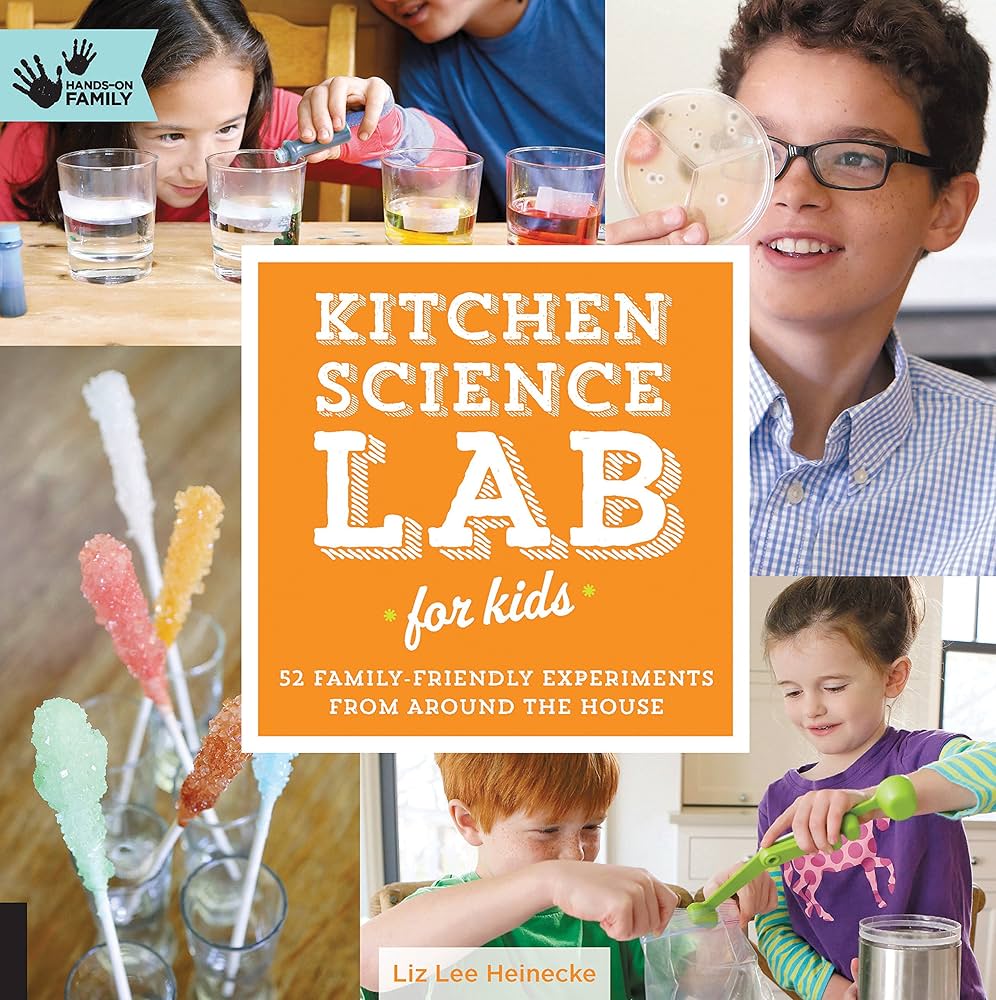
Kitchen Science Lab for Kids: 52 Family Friendly Experiments from Around the House
By Liz Lee Heinecke
Liz Lee Heinecke, known as “The Kitchen Pantry Scientist”, makes chemistry wonderfully approachable by showing families how much science is already hiding in the refrigerator, pantry and junk drawer. This hands-on guide features 52 kid-friendly experiments using everyday materials, with simple explanations that help children and adults alike understand the science behind each activity.
The labs are fun and easy to set up. Kids can use red cabbage juice as a color-changing indicator, inflate a balloon with carbon dioxide from a vinegar-and-baking-soda reaction, and make gummy worms “dance” through a simple chemical reaction. The book also encourages young scientists to keep a science journal for recording observations and practicing the scientific method during investigations at home, outdoors or even on vacation.









Leave a Reply