Artemis II gave us stunning new views of the moon and reinvigorated our sense of wonder about the universe. It also underscored why scientific literacy is a skill we need to cultivate long after our school years end.
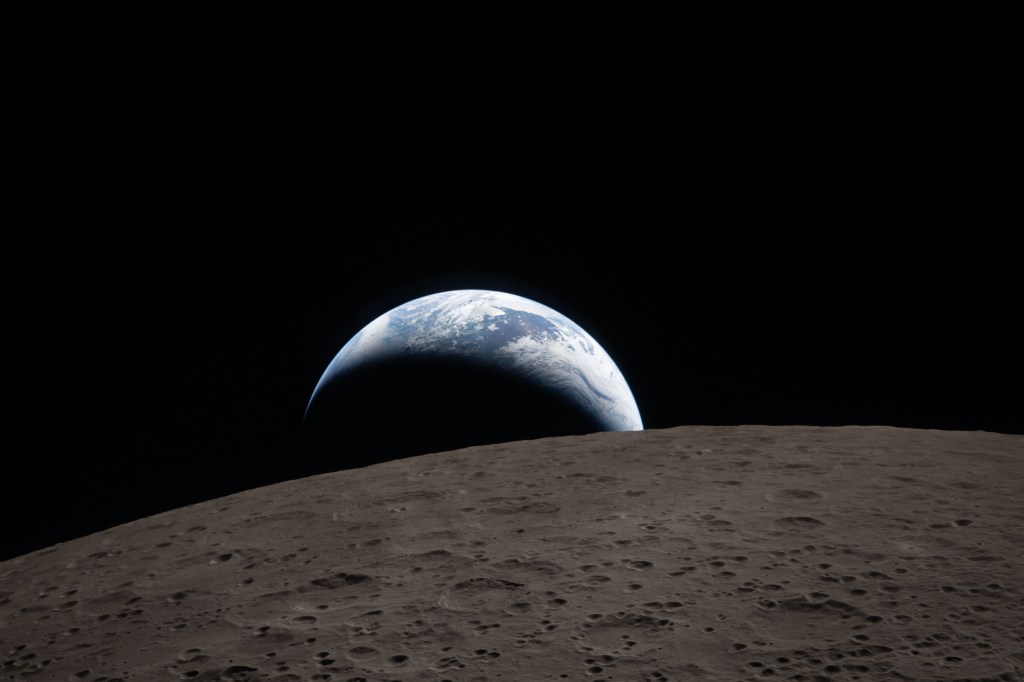
The historic Artemis II mission offered plenty to marvel at this past week. As I scrolled through NASA’s image gallery, I paused at one breathtaking view after another: a crescent Earth setting along the moon’s horizon, streamers of light extending from the lunar disk during a solar eclipse, and ancient lava plains and rugged craters never before seen with human eyes.
Millions of people followed the nine-day, 700,237-mile journey. Along the way, terms such as translunar injection burn, Earthrise and lunar sphere of influence moved from NASA briefings into social media feeds and dinner table conversations.
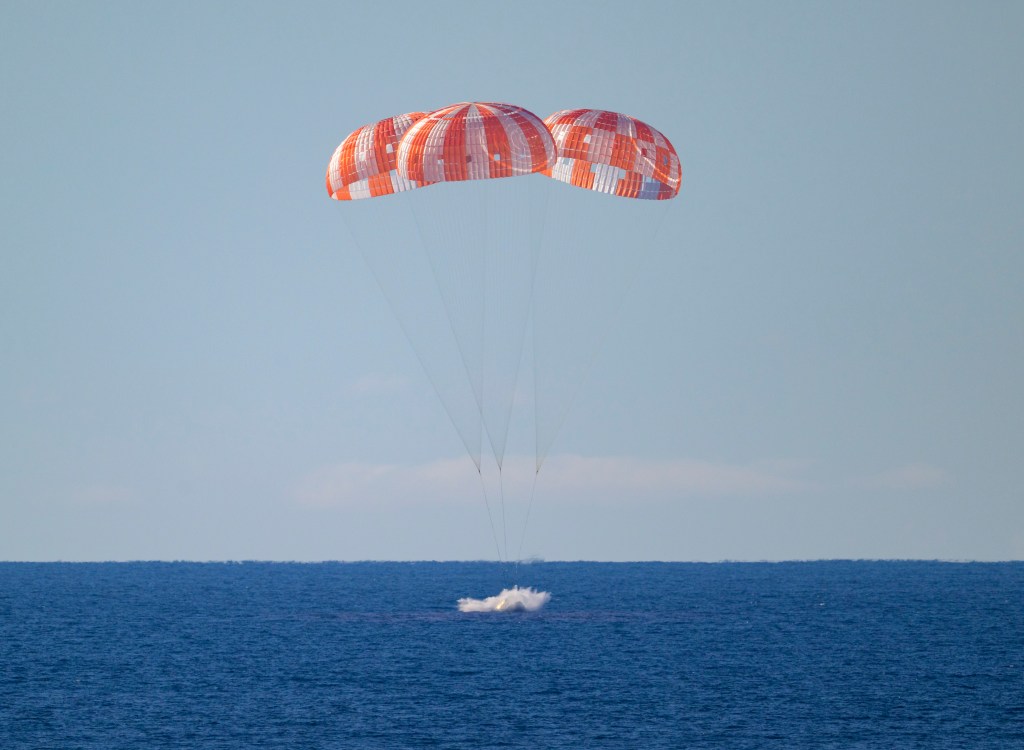
When Orion splashed down and the four crew members emerged from the capsule healthy and in good spirits, I felt a wave of relief, followed by pride and awe. My daughter pumped her fist in the air. “I’m going to go to space one day!” she exclaimed.
Moments like this inspire future scientists like my daughter, but they also remind the rest of us of the joy of science, even if our classroom days are long behind us.
Scientific knowledge helps us appreciate both the wonders of the natural world and the ingenuity of human achievement. But we do not have to travel to the moon to see how intricately science shapes our lives. It touches nearly every part of our day, whether we’re evaluating the claims of a nutritional supplement, choosing a sunscreen or making sense of public debates about energy and power grids.
To navigate these choices well, we need the tools to ask good questions, weigh evidence and make informed decisions. We need scientific literacy.
And scientific literacy is not something we finish once and for all in school. It is a lifelong process because science itself is always evolving.
“Most adults will learn most of their science information after they leave formal schooling.”
Jon D. Miller, political scientist
Author and political scientist Jon D. Miller suggests that we acquire most of our science information long after we leave formal schooling. “How many current adults can claim that they studied stem cells or nanotechnology when they were students?” he writes. “In the decades ahead, the number and nature of new scientific issues reaching the public-policy agenda will not be limited to subjects that might have been studied in school but will reflect the dynamic of modern science and technology.”
What Is Scientific Literacy?
The term “scientific literacy” traces back to 1945 and the work of atomic physicist and educator Gaylord Harnwell. It emerged at a time when literacy was already a major national concern during and after World War II. By framing science understanding as a form of literacy, Harnwell and other advocates helped elevate it to the level of a basic civic necessity, alongside reading and writing.
More recently, the National Science Education Standards offered a widely used definition:
“Scientific literacy is the knowledge and understanding of scientific concepts and processes required for personal decision making, participation in civic and cultural affairs, and economic productivity.”
Scholars argue that several key abilities are central to scientific literacy. A scientifically literate person can ask questions about everyday experiences, seek reliable answers and use science to describe, explain and predict natural phenomena. Scientific literacy also means understanding science as it appears in the popular press and public policy debates, evaluating the validity of scientific claims and assessing information based on its source and methods.
Cultivating scientific literacy does not require expert knowledge of mathematical formulas, technical vocabulary or isolated facts. As Robert M. Hazen, senior staff scientist at the Carnegie Institution’s Earth and Planets Laboratory and Clarence Robinson Professor of Earth Sciences, emeritus, at George Mason University, has explained, there is a difference between doing science and using science. Scientific literacy is about using science to become a more informed citizen and consumer.
“Everyone can achieve scientific literacy,” Hazen told students in a Great Courses lecture. “Everyone can share the joy of science.”
Why Scientific Literacy Matters
Scientific literacy matters not just in classrooms, but in daily life, at work, at home and in public life.
It helps people make informed decisions.
Scientific knowledge helps people understand how products, treatments and technologies work. It also supports better decision-making in everyday life, from healthcare choices and conversations with doctors to decisions about diet, exercise, conservation, recycling and environmentally responsible products. Just as importantly, it helps us evaluate the credibility of research and recognize misinformation on the internet and social media.
It is valuable across many fields and professions.
Today’s workplace depends on the ability to understand evidence, assess risk and evaluate new technologies. Doctors and nurses interpret test results and weigh the benefits and risks of medical procedures. Lawyers evaluate forensic evidence and expert testimony. Investors assess the potential of high-tech companies and emerging technologies. Legislators and voters make decisions about issues such as the environment, medicine, public health and science funding.
It helps adults nurture children’s curiosity.
Scientific literacy also provides a foundation for teaching children. Parents and teachers who are comfortable with science are better prepared to explore questions alongside children and encourage their natural curiosity about the world.
It opens the door to discovery.
Science is not only practical. It also invites us to share in the excitement of discovery and exploration. Scientific literacy helps us better appreciate the natural world and humanity’s ongoing effort to understand it.
Scientific Literacy: Knowledge and Skills
What knowledge and skills do we need to understand a science article in The New York Times, decide whether to undergo a medical treatment or help a child build a battery for a science fair project? Scholars have been debating that question since the Sputnik era.
In general, scholars agree that scientific literacy involves understanding the big ideas from the major branches of science, including physics, biology, chemistry, astronomy and earth science. For example, Jon D. Miller asserts that it is more important to understand E = mc2 as a relationship between mass and energy than to know the mathematics behind it. Likewise, it is more important to understand how plate tectonics work than to distinguish among specific rock types such as sedimentary rock and basalt.
Scientific literacy also involves understanding science as a way of knowing about the natural world through reproducible observations and carefully controlled experiments. It includes understanding how science builds reliable knowledge through consensus. That process relies on peer review, replication, critique and ongoing discussion among experts.
“Debate is a normal part of science-in-the-making,” write science education scholars Jonathon Osborne and Douglas Allchin. “More fundamentally, it is a sign of a healthy, active scientific community, still engaged in research.”
Osborne and Allchin argue that scientific literacy helps build “informed trust” in science. It also equips citizens and students to navigate misinformation and “science-in-the-wild,” or scientific claims encountered outside formal scientific institutions. A key question for citizens, they argue, is not just “What is the evidence?” but also: Who is making this claim? What are their credentials? Do they represent expert consensus? Do they have a conflict of interest?
Another hallmark of scientific literacy is the development of habits of mind such as questioning assumptions, gathering evidence, testing ideas, considering multiple viewpoints and recognizing relationships within systems. These habits of mind are what science communicator and chemist Mai Thi Nguyen-Kim calls the “scientific spirit.”
In her book, Chemistry for Breakfast, Nguyen-Kim explains, “Scientific spirit means not taking anything for granted and observing the world through fresh eyes. Looking for the miraculous in the familiar.”
If the Artemis II mission has inspired you to brush up on science, stay tuned for my next post, where I’ll share practical ways to build your scientific literacy.
Sources:
Biscontini, T. (2024). Scientific literacy. EBSCO Research Starters. https://www.ebsco.com/research-starters/education/scientific-literacy
Hazen, R. M. (2000). The joy of science [Video series]. The Great Courses.
Hazen, R. M., & Trefil, J. (2009). Science matters: Achieving scientific literacy (2nd Anchor Books ed.). Anchor Books.
Lombrozo, T. (2015, September 14). Scientific literacy: It’s not (just) about the facts. NPR. Available from: www.npr.org/sections/13.7/2015/09/14/440213603/scientific-literacy-it-s-not-just-about-the-facts
Miller, J. D. (2010). The conceptualization and measurement of civic scientific literacy for the twenty-first century. In J. Meinwald & J. G. Hildebrand (Eds.), Science and the educated American: A core component of liberal education. American Academy of Arts and Sciences.
Nguyen-Kim, M. T. (2021). Chemistry for breakfast: The amazing science of everyday life. Greystone Books.
Osborne, J., & Allchin, D. (2025). Science literacy in the twenty-first century: Informed trust and the competent outsider. International Journal of Science Education, 47(15–16), 2134–2155. https://doi.org/10.1080/09500693.2024.2331980
Rudolph, J. L. (2024). Scientific literacy: Its real origin story and functional role in American education. Journal of Research in Science Teaching, 61(3), 519–532.






 Project: Dabble
Leave a comment