A strong vocabulary enhances your reading, writing, speaking and thinking skills. Research suggests it can even boost your earning power at work. Explore these books, apps and online tools to expand your personal lexicon and deepen your appreciation for the beauty of words.
Vocabulary Training Programs
The Great Courses: Building a Better Vocabulary
Building a Better Vocabulary from The Great Courses takes an active, research-based approach to vocabulary acquisition rather than relying on rote memorization. Taught by Professor Kevin Flanigan, each 30-minute lecture explores roots and word families and shows learners how to actively engage with target words so they are stored in long-term memory and readily available for use in everyday speaking and writing.
Wordbook
This free app created by the Johnson O’Connor Research Foundation features 1,440 words organized into eight levels, beginning with a placement test to match learners to the right starting point. Each level includes 12 word sets with a pretest, targeted practice and cumulative reviews to strengthen retention. The step-by-step structure supports steady vocabulary growth and clearer communication in school and professional settings.
VocabTrainer
Vocabulary.com offers a subscription-based, adaptive online program that personalizes vocabulary practice in real time. Through a game-like format, it presents words in context, adjusts difficulty based on your responses and strategically revisits challenging terms. The platform also includes targeted test prep tracks for the SAT, PSAT, ACT, TOEFL, and GRE.
Vocabulary Books
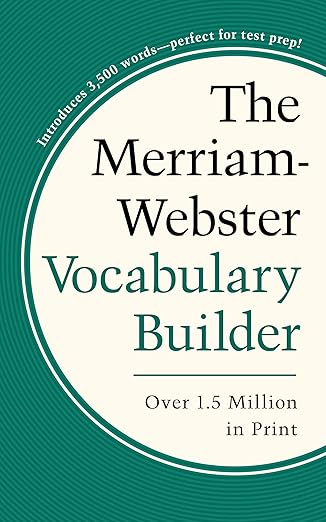
Merriam-Webster’s Vocabulary Builder
Merriam-Webster’s Vocabulary Builder is a practical guide that helps readers expand their vocabulary by learning common Greek and Latin roots, prefixes and suffixes. Words are grouped by shared word parts, making it easier to recognize patterns, infer meanings and remember new terms. With clear explanations and practice exercises, the book supports steady, long-term vocabulary growth for academic, professional and personal use.
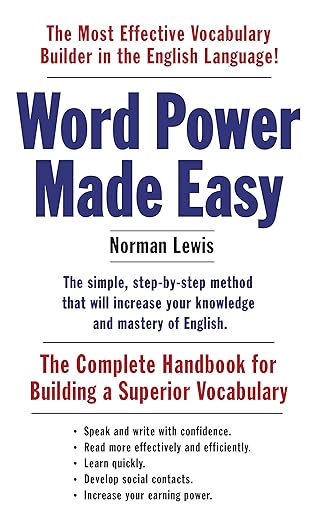
Word Power Made Easy: The Complete Handbook for Building a Superior Vocabulary
By Norman Lewis
This classic, self-paced vocabulary program teaches words through thematic sections ranging from how to flatter friends to how to talk precisely about science and medicine. Organized into short, interactive lessons with quizzes and review exercises, the book emphasizes understanding how words are formed and how they relate to one another. Its systematic structure helps learners build a strong, flexible vocabulary over time.
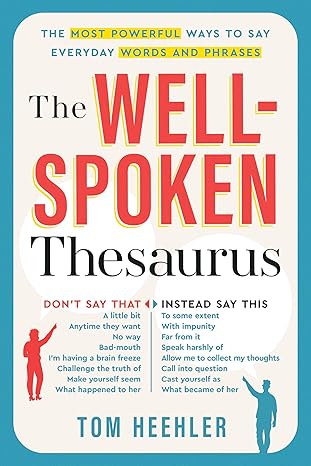
The Well-Spoken Thesaurus
By Tom Heehler
A practical reference designed to help readers replace ordinary words and phrases with more precise and polished alternatives. Organized by categories such as “negative emotions” and “intellectual terms,” it offers elevated substitutions along with a usage guide. The book is especially helpful for professionals, students, and anyone who wants to communicate with greater clarity and style.
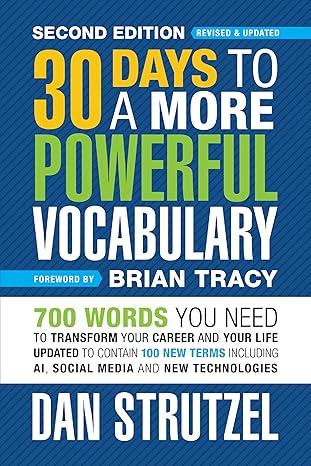
30 Days to a More Powerful Vocabulary (2nd Edition)
By Dan Strutzel
Entrepreneur and personal development expert Dan Strutzel argues that a strong vocabulary is a powerful tool for career advancement and increased earning potential. He offers a 30-day program that helps busy adults strengthen their vocabulary through manageable daily lessons. The book introduces high-impact words commonly used in professional and academic settings, with clear definitions, examples and brief exercises to reinforce retention.
Online Resources
Merriam-Webster
The classic dictionary’s website offers far more than standard dictionary definitions. In addition to concise entries with example sentences, etymologies, and usage guidance, it features a popular Word of the Day, podcasts, vocabulary quizzes and games, grammar resources and newsletters. It’s a comprehensive, user-friendly hub for anyone who wants to strengthen vocabulary while also sharpening grammar and language skills.
The Online Etymology Dictionary
This is a free, searchable resource that traces the histories and origins of English words, often reaching back to their earliest recorded uses. It helps learners understand how meanings evolve over time and how words are connected, making it a powerful tool for deepening vocabulary knowledge and supporting inference when encountering unfamiliar words.
WordOrigins.org
Created by author David Wilton, WordOrigins explores the histories and stories behind words and phrases in clear, engaging prose. Rather than serving as a quick-reference dictionary, the site focuses on explaining how words developed, how their meanings shifted and why common assumptions about word origins are sometimes wrong.
Snappy Words
This interactive visual dictionary shows how words are connected through meaning, synonyms, associations and related concepts. Presenting vocabulary as a web of relationships rather than isolated definitions is an especially powerful way to deepen your understanding of target words and build a more flexible, interconnected vocabulary.







 Project: Dabble
Leave a comment