Collecting fossils is a fun outdoor activity for all ages. Families, students, and hobbyists can take part in this hands-on science and help preserve specimens that might otherwise be lost to erosion.
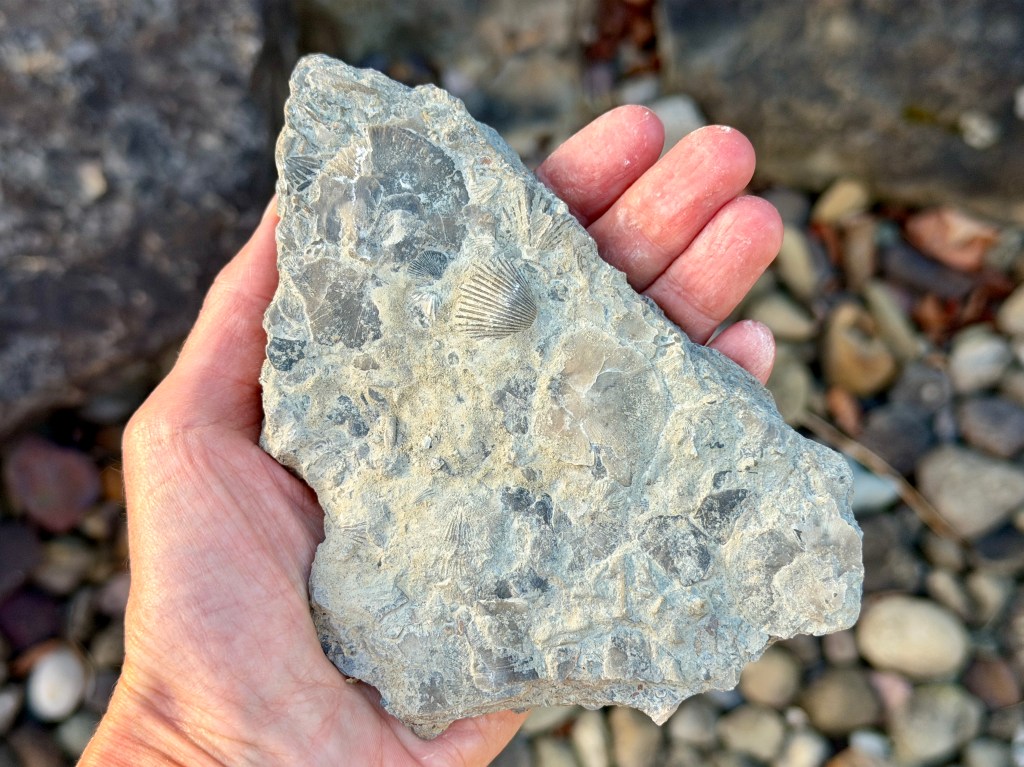
Ohio is world-famous for its fossils. Millions of years ago, this land was covered by warm tropical seas filled with corals, trilobites, and other marine life. Their fossils, now preserved in shale and limestone, attract collectors and scientists from around the globe.
At least, that’s what I tried explaining to my kids during the three-and-a-half-hour drive to Cincinnati to visit their grandparents. I had planned for us to spend the next morning exploring Trammel Fossil Park to see what pieces of Ohio’s ancient ocean we might discover.
Cruising past stretches of farmland, I braced myself and announced, “We’re going fossil hunting!”
On cue came groans and gags from the backseat, where my 13-year-old son and 10-year-old daughter were whipped from the trance of a Marvel movie on their iPad.
“Why?” asked my son. “Can’t we go to Kings Island instead?”
Maybe fossil hunting couldn’t compete with their favorite amusement park, but I had a different kind of thrill in mind: holding a piece of Earth’s deep past in our hands.
Ohio’s Geologic Story
Roughly 440 million years ago, the land we now call Ohio lay near the equator, submerged beneath shallow seas much like the Bahamas today. Life was abundant in these waters as early fish darted through reefs crowded with shell-covered creatures.
As time passed, the seas deepened and the seafloor turned into stagnant black muds that would eventually form the Ohio Shale found in central and northeastern parts of the state. There was little life on the seafloor then, but large armored fish such as Dunkleosteus terrelli prowled the fertile surface waters above.
When the seas finally receded, swampy forests spread across eastern Ohio. Fossils of giant cockroaches, millipedes, and early amphibians are found in coal, shale, and sandstone throughout the region. Although dinosaurs likely roamed Ohio, no evidence remains. Erosion later destroyed the rocks that might have recorded their presence.
During the Ice Age, glaciers up to a mile thick scraped and reshaped much of the state into rolling terrain. When the ice melted, it revealed the remains of mastodons, mammoths, and giant beavers that once flourished here.
Exploring Trammel Fossil Park
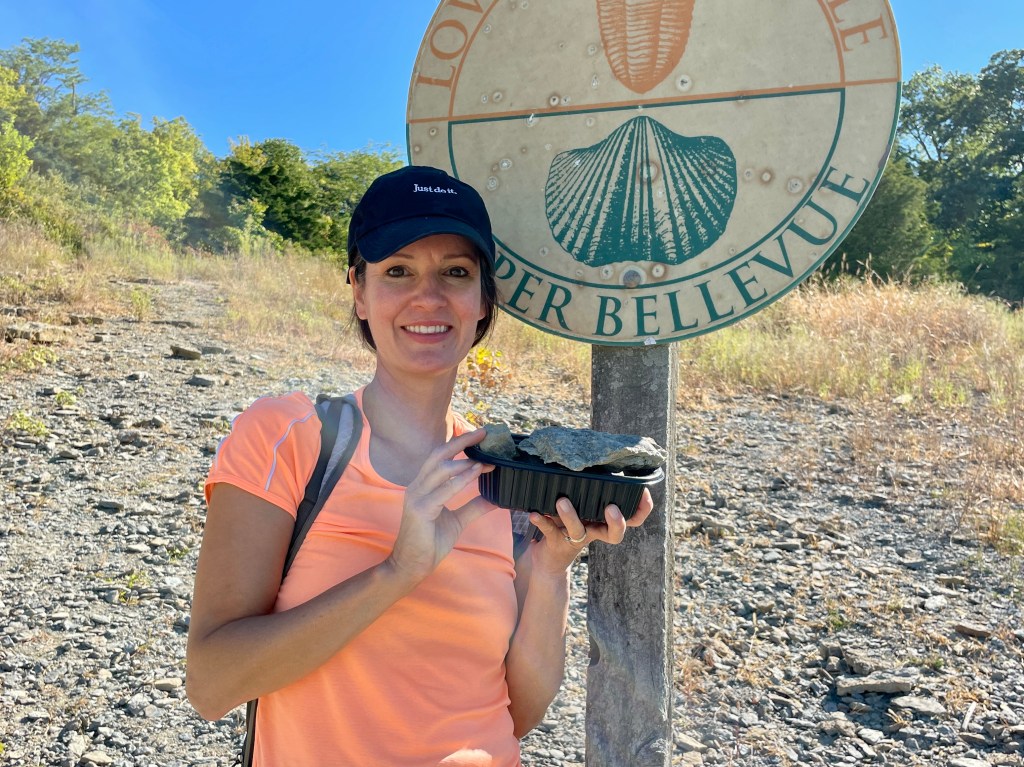
We wound past loading bays and supply yards along Tramway Drive on a sunny September morning. The rocky hillside of Trammel Fossil Park came into view, rising above the industrial landscape. My dad and kids started up the slope. Two other families were already crouching among the stones with buckets and small shovels in hand.
We picked a spot halfway up the hill to start searching. It didn’t take long to find our first treasures: the ridged shells of brachiopods, the star-shaped stems of crinoids, and the twig-like impressions of bryozoans.
Soon the kids were completely absorbed. My son jogged over now and then to show off his latest find before racing back up the hill for more. My dad helped them identify the coral and seashell patterns using the colorful interpretive signs near the picnic area. A salamander scuttled across the loose rocks under the hot sun. “This is actually fun!” my daughter said.
Before it became a public park, the 10-acre site had drawn students and researchers for its fossil-rich formations, which together reveal a two-million-year slice of the Late Ordovician. In 2001, a team from the University of Cincinnati and members of the Dry Dredgers fossil club discovered rare edrioasteroids, extinct starfish-like creatures. Recognizing the site’s geologic importance, industrial park developers R. L. Trammel and his wife, Ellen, donated the land for public use. Trammel Fossil Park was officially dedicated in 2003.
One of the best things about Trammel Park is that visitors can take home what they find. By midday, our buckets held dozens of ancient specimens that we could continue to admire at home.
Fossil Hunting: How to Get Started
Collecting fossils is a fun outdoor activity for all ages. Families, students, and hobbyists can take part in this hands-on science and help preserve specimens that might otherwise be lost to erosion. Amateur collectors who document their discoveries have made meaningful contributions to paleontology. Some have even had fossils named in their honor.
Check out these tips for getting started and explore my recent post “How to Identify Fossils: Guides, Books, and Online Resources” for more tools and inspiration.
Where to Find and Collect Fossils
Fossils can turn up in many places, both natural and manmade. State and local parks often have exposed rock layers where visitors can view and photograph fossils, and in some cases, such as Trammel Fossil Park, collect them. Fossils can also be seen in the stone walls of historic buildings or in natural settings like cliffs, bluffs, and stream valleys, where erosion has exposed ancient rock.
Road cuts and other manmade excavations are also excellent places to look because they slice through deep layers of bedrock. Quarries and mines often reveal large fossil-bearing areas, but these are private properties, so always get permission before entering or collecting.
Safety and Preparation
Before you head out, take time to prepare. Research the area you plan to visit so you know what types of fossils are likely to be found, and always get permission if you will be collecting on private land. Avoid going alone to isolated sites, and stay aware of your surroundings.
Safety should always come first. Avoid fossil hunting during thunderstorms, and watch for loose rocks, slippery slopes, snakes, and insects. When using tools such as hammers or chisels, wear safety goggles and gloves for protection. The best time to search is often after a rainfall, when newly exposed soil reveals fossils that might otherwise go unnoticed.
What to Bring
Good preparation makes a fossil-hunting trip safer and more enjoyable. Wear sturdy footwear and weather-appropriate clothing, and pack essentials such as water, snacks, sunscreen, bug spray, and a hat. Bring a cell phone for emergencies, along with a map and directions to your site. A first aid kit, gloves, knee pads, and safety glasses are important for comfort and protection.
For collecting, take cloth or plastic bags to hold specimens and label them using permanent markers and specimen tags. A hand lens or magnifying glass can help you see small details, while a notebook and pencil are useful for recording observations. If permitted, bring tools such as a rock hammer, chisel, or small shovel for careful excavation. A sturdy backpack will help you carry everything easily.
Labeling Your Finds
Keeping accurate records adds to your collection’s scientific value. Record details about where and when you found each fossil on a specimen label in the field. You can update it later as you identify your finds.
Specimen Label Information:
- Common Name
- Specimen No.
- Scientific Name
- Location
- Formation
- Age
- Description
- Size
- Found by
- Date
Collecting in the Field
When you arrive at a collecting site, take your time and work carefully. Patience is key, since a single hard strike can easily damage a fossil. Use larger tools to remove loose or unwanted rock, then switch to smaller tools as you get closer to uncovering the specimen.
Follow the natural breaks or bedding planes in the rock instead of forcing it apart. Whenever possible, remove the entire piece of rock containing the fossil rather than trying to extract it at the site. You can clean and prepare it more safely at home.
Join a Fossil Group
Fossil collecting is even more rewarding when shared with others. Experienced collectors and paleontologists can offer valuable guidance on where to look, what to bring, and how to collect responsibly. Joining a local fossil or rock club is one of the best ways to learn. Most groups welcome beginners and organize field trips, host expert talks, and provide access to collecting sites that might otherwise be off-limits.
You can find local clubs through a quick online search or by contacting nearby museums or universities. Whether you are identifying your first trilobite or adding to a growing collection, joining a fossil club is a great way to keep learning and uncover the stories hidden in stone.
Fossil hunting is an exciting way to spend time outdoors and see the natural world through new eyes. Each new find holds a fragment of history waiting to be uncovered.
References
Historical Marker Database. (2025, September 25). Trammel Park Fossil Park – Historical Marker Database. Retrieved from https://www.hmdb.org/m.asp?m=283647
Cincinnati Museum Center. (n.d.). Finding fossils. Retrieved from https://www.cincymuseum.org/finding-fossils/
City of Sharonville. (n.d.). Trammel Park user guide [PDF]. Retrieved from https://www.sharonville.org/DocumentCenter/View/2976/Trammel-Park-User-Guide?bidId=
Ohio Department of Natural Resources, Division of Geological Survey. (n.d.). Fossil collecting in Ohio. Retrieved from https://ohiodnr.gov/discover-and-learn/safety-conservation/about-ODNR/geologic-survey/rocks-fossils-identification/fossil-collecting-in-ohio
Ohio Department of Natural Resources, Division of Geological Survey. (n.d.). Fossils in Ohio. Retrieved from https://ohiodnr.gov/discover-and-learn/safety-conservation/about-ODNR/geologic-survey/rocks-fossils-identification/fossils-in-ohio






 Project: Dabble
Leave a comment