There’s joy in trying something new simply because it sparks your interest. When we let go of the need to excel and give ourselves space to explore, we reconnect with a sense of wonder that too often fades with age. Lifelong learning begins with the courage to dabble.

As children, we’re given the gift of exploration. School exposes us to a wide range of subjects. History, world languages, science, math, the arts, and physical education are all part of a well-rounded education. Some classes ignite us, while others bring us to tears.
For me, it was always gym class. Tripping over my two left feet during basketball drills, fumbling my way across the tennis court, I never quite fit into the win-or-lose spirit of team sports. But the summer after 10th grade, I had the chance to take a class called Outdoor Recreation to fulfill my PE requirement. I spent six sunshine-soaked weeks learning to steer a canoe, cast a fishing line, and improve my hand-eye coordination through archery. I realized I could enjoy being physically active, not through competition, but by connecting with nature.
Each subject we encounter in school, regardless of the grade we earn or how well we perform, offers a clue about who we are and what drives us.
But then we hit adulthood, and our world becomes increasingly specialized as we settle into our careers and responsibilities. We become experts in a narrow set of skills. Our worth is measured by output and efficiency. Even our hobbies can start to feel performance-driven by the metrics we use to track them. What was your average pace on that trail? How many books did you finish this month? How many DIY projects did you pin?
Trying something just because is often viewed as unfocused or unserious. But this fixation on outcomes can have an unintended consequence: it narrows our possibilities. If the only acceptable finish line is mastery, we may never give ourselves permission to begin.
Writing Your Own Curriculum
To recapture that sense of joyful discovery from our childhood, we need to write our own curriculum for lifelong learning. We need to give ourselves permission to explore new skills and try things we may or may not be good at. In short, we need to dabble.
Engaging in lifelong learning, especially across diverse domains, has been shown to support creativity, flexible thinking, and more effective problem solving. Swiss psychologist Jean Piaget (1896-1980) proposed that we build knowledge through schemas: mental structures that help us organize and interpret information. When we learn something new, we either connect it to an existing schema or refine what we already know to make room for the new knowledge. The more varied our experiences, the more adaptable our thinking becomes.
Research shows lifelong learning helps protect against cognitive decline by promoting mental stimulation and social engagement, whether you’re learning alongside friends and family, meeting new people in a class, or joining a broader community of like-minded dabblers.
Trying something outside our comfort zone also strengthens self-efficacy – our belief in our ability to handle new challenges. That confidence makes it easier to take future risks. And the benefits of lifelong learning don’t depend on being great at what you’re doing. They show up whether you master the skill or simply enjoy the process.
Still, even when we want to explore a new interest, many of us hold back. Why? Because we’re taught to aim high, commit fully, and finish strong. How many of these statements resonate with you?
- Give it your all.
- Be the best.
- Winners never quit.
- Don’t be a dabbler.
This fear about being a “dabbler” keeps us from discovering what we’re capable of. When we only invest in skills tied to achievement or external rewards, we miss out on the delight and self-renewal that come from learning for the sake of learning.
Creating Learning Projects
At the heart of dabbling are what I call “learning projects” – self-directed explorations centered on a skill, topic, or interest for a sustained period of time. They don’t have to be big or formal. Some of mine have been structured, such as joining Toastmasters to improve my public speaking skills. Others have been more informal: researching how to teach my dog Rex a few new tricks, or reading books about cryptography with my kids and writing secret messages to each other.
A learning project begins with a spark of curiosity and grows as you follow that interest, experiment, reflect, and keep exploring.
Not every learning project ends with a new passion, and that’s part of the point. I discovered I don’t have the patience for bird watching. And while spelunking sounded exciting in theory, crawling through a narrow passage in Mammoth Cave triggered an intense bout of claustrophobia. But pushing through that moment gave me a deeper sense of self-efficacy, and a good story to tell. Even when an interest doesn’t stick, the experience can still add dimension to your life.
Some dabbles, though, have not only stuck but shaped the course of my life. My interest in learning strategies to support my kids’ language and literacy development when they were preschoolers led me to earn my teaching license and make a career shift into public education.
Myths & Misconceptions About Dabbling
Even with all its benefits, the idea of being a “dabbler” can still give us pause. That’s because we’ve absorbed a lot of myths about what it means to learn, grow, and succeed. Here are a few that I’ve had to unlearn along the way.
Myth #1: Dabbling means you’re not serious.
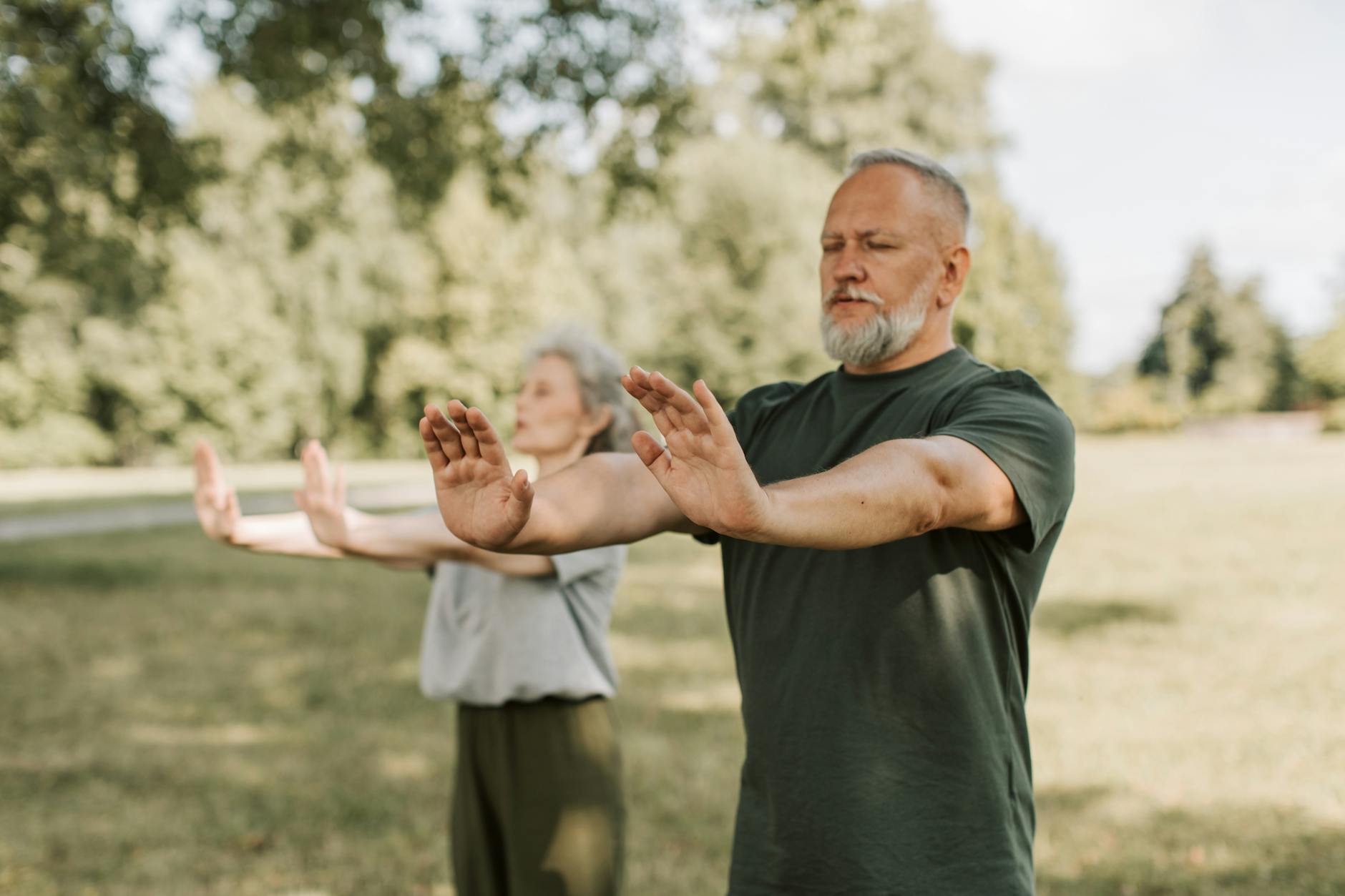
Dabbling can be deeply intentional. It reflects curiosity, openness, and a willingness to be a beginner. And you don’t have to pursue something forever to take it seriously in the moment. With tai chi, for example, I take notes on the forms we’re learning in class and enjoy reading about the history and science of this ancient mind-body practice. This helps me connect more deeply with the forms and their meaning.
Myth #2: Dabblers never finish anything.
Finishing isn’t always the point. The value often comes from the experience itself – trying something new, learning along the way, and deciding whether to go deeper or move on. After graduating from college, I signed up for a summer taekwondo class before moving to Boston for graduate school. I didn’t go beyond the yellow belt, but I left with a huge sense of pride after learning to break a board and a deep appreciation for the discipline.
Myth #3. Dabbling is a waste of time.
Far from it. Dabbling builds creative thinking, mental flexibility, and personal growth. It’s exploration, not waste. In the excellent book Range: Why Generalists Triumph in a Specialized World, author David Epstein notes that scientists who went on to win the Nobel Prize are at least 22 times more likely than their peers to be an amateur actor, dancer, magician, or other type of performer. Engaging in the performing arts gives them fresh ways of thinking and insights that often cross-pollinate with their scientific work.
Myth #4. You have to master something for it to “count.”
Not every interest has to turn into a side hustle or end in certification. Learning for the sake of learning is valuable on its own. Before we were married, my husband and I dabbled in golf. On date nights, he’d take me to the driving range at our local public course. I never mastered my swing, but we made memories, spent time outdoors, and learned something new together. That counts.
Myth #5. Dabblers lack focus or discipline.
Many dabblers are deeply focused, just on many things. My interest in digital photography was sparked by a desire to document our family life and take better portraits of our kids. I set clear learning objectives, sought out resources to understand how to use my DSLR, and set up small challenges for myself to explore the principles of exposure and composition. Dabbling means managing your own learning path with curiosity, intention, and flexibility.
Myth #6. Dabbling is only for people with lots of free time.
Even small pockets of time can support meaningful exploration. Dabbling is more about mindset than hours logged. As a working parent, I rely on short, frequent bursts of practice when I’m in the midst of a learning project, such as preparing a Toastmasters speech. This approach, called distributed practice or spaced repetitiion, is often more effective than long cram sessions.
Myth #7. If you dabble, you’ll never be good at anything.
Dabbling can lead to surprising depth over time. Trying many things doesn’t mean you can’t go deep. It means you’ve built a strong foundation of experience, creativity, and adaptability. By dabbling in journalism, education, and digital photography, I’ve developed a range of storytelling skills that help me connect with different audiences while having a lot of fun along the way!
So go ahead. Give yourself permission to dabble and open the door to unexpected joy, growth, and self-discovery. You never know what you’ll find, or who you’ll become, when you do. Your next great discovery might begin with a simple, “Why not?”






 Project: Dabble
Leave a comment